

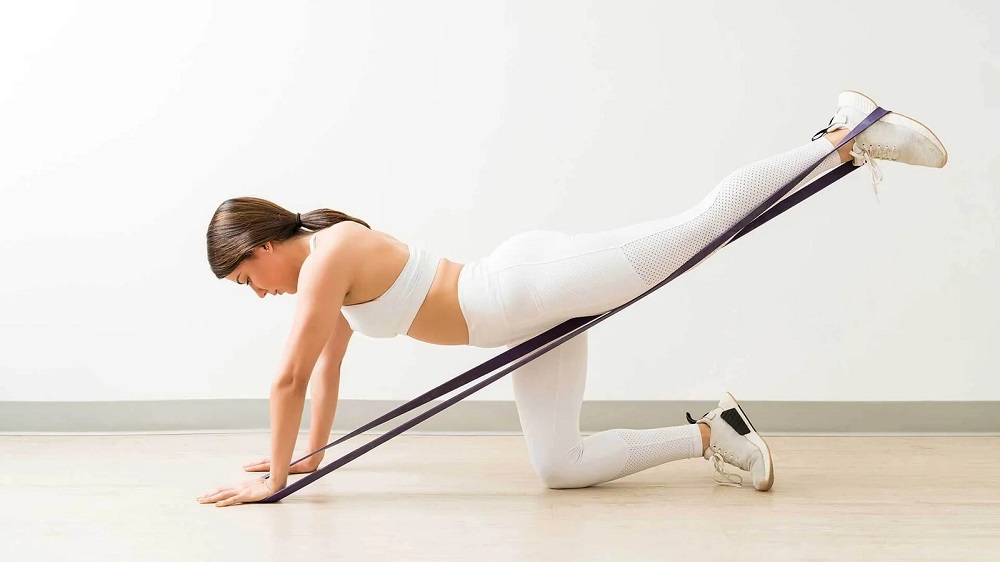
Resistance bands are among the most versatile, accessible, and effective tools in modern fitness. Whether you are an absolute beginner taking your first steps toward physical health, an intermediate enthusiast looking to diversify your routine, or an advanced athlete aiming to build explosive power and target specific muscle groups, resistance bands offer a full-body workout without the need for expensive, bulky gym equipment.
Unlike traditional free weights, such as dumbbells or kettlebells, resistance bands provide continuous tension throughout the entire range of motion of an exercise. This constant tension maximizes muscle engagement while drastically reducing stress on the joints. They are lightweight, portable, and available in various resistance levels, making them an ideal choice for home workouts, travel, or gym training.
Understanding Resistance Bands and Their Benefits
Before diving into specific exercises, it is essential to understand why resistance bands are so effective and how different types of bands serve different training purposes.
Types of Resistance Bands
-
Loop Bands: Flat, continuous elastic loops commonly available in thin mini-loop varieties for lower-body activation or larger heavy-duty loops for full-body strength training and pull-up assistance.
-
Tube Bands with Handles: Durable rubber tubes equipped with handles on both ends, making them ideal for replicating traditional cable machine exercises like bicep curls and chest presses.
-
Therapy Bands: Long, flat, open-ended sheets of latex often used in physical therapy and rehabilitation settings to improve flexibility and joint mobility.
Key Benefits of Band Training
-
Joint-Friendly Resistance: The linear variable resistance of bands means tension increases as the band stretches, placing less force on joints at their weakest angles and maximum load where muscles are strongest.
-
Variable Motion Paths: Unlike fixed machines, bands allow movement in multiple planes, improving stabilizer muscle activation and functional balance.
-
Convenience and Portability: Bands take up minimal space and fit easily into a bag, eliminating excuses for missing workouts while away from home.
Beginner Level: Foundation and Movement Mastery
For beginners, resistance band training focuses on establishing proper form, building baseline strength, and activating key muscle groups without overloading joints.
Banded Lateral Walk
Targeting the gluteus medius, this movement builds hip stability and prevents knee caving during fundamental exercises like squats.
-
Setup: Place a mini loop band around your legs, positioned either right above your knees for lower resistance or around your ankles for higher resistance.
-
Execution: Stand with feet hip-width apart, knees slightly bent, and core engaged. Step sideways to the right with your right foot, maintaining tension on the band, then follow with your left foot without letting your feet touch. Take ten steps to the right, then reverse for ten steps to the left.
-
Key Tip: Keep your toes pointed forward and avoid swaying your torso side to side.
Standing Resistance Band Row
This exercise strengthens the upper back and rear shoulders, counteracting the poor posture associated with prolonged sitting and computer use.
-
Setup: Anchor a resistance band with handles to a sturdy post at chest height, or wrap a long loop band around the soles of your feet while seated on the floor with legs extended.
-
Execution: Hold the handles or band ends with arms fully extended, palms facing each other. Pull your elbows straight back, squeezing your shoulder blades together at the peak of the movement. Pause briefly, then slowly return to the starting position.
-
Key Tip: Keep your shoulders pulled down away from your ears throughout the motion.
Banded Glute Bridge
Glute bridges strengthen the posterior chain, supporting lower back health and improving overall hip extension strength.
-
Setup: Place a mini loop band around your thighs, just above the knees. Lie on your back with knees bent, feet flat on the floor hip-width apart, and arms at your sides.
-
Execution: Press your knees outward slightly to create tension on the band. Drive through your heels to lift your hips toward the ceiling until your body forms a straight line from knees to shoulders. Squeeze your glutes firmly at the top, hold for one second, and lower under control.
-
Key Tip: Do not arch your lower back at the top; focus on driving the movement purely through your hips.
Intermediate Level: Building Strength and Endurance
Once fundamental movement patterns are mastered, intermediate lifters can increase tension, incorporate multi-joint compound exercises, and challenge balance.
Resistance Band Squat and Overhead Press
This compound thruster-style exercise combines lower-body drive with upper-body pressing, boosting cardiovascular endurance and total-body power.
-
Setup: Stand on the middle of a long loop or tube band with feet shoulder-width apart. Hold the handles or top of the loop at shoulder height with palms facing forward and elbows bent.
-
Execution: Sit your hips back and down into a parallel squat, keeping your chest upright and knees tracking over your toes. As you drive through your feet to stand back up, fluidly press the band straight overhead until your arms are fully extended. Lower the band back to shoulder level as you drop into the next repetition.
-
Key Tip: Maintain a tight core to avoid arching your lower back as you press overhead.
Banded Push-Up
Adding a band to standard push-ups increases resistance toward the top of the movement, significantly building chest, shoulder, and tricep strength.
-
Setup: Hold the ends of a loop band in both hands and wrap the middle section across your upper back. Assume a standard plank position with hands slightly wider than shoulder-width apart.
-
Execution: Lower your body under control until your chest nearly touches the floor. Drive explosively through your palms to push back up, working against the added tension of the band stretching across your back.
-
Key Tip: Keep your body in a rigid straight line from head to heels throughout the entire set.
Resistance Band Woodchopper
Rotational movements enhance core strength and stability, translating directly to athletic performance and rotational core control.
-
Setup: Anchor a tube band with a handle to a secure point near the top of a door frame or high rig. Stand side-facing to the anchor point, grabbing the handle with both hands over one shoulder.
-
Execution: Rotate your torso diagonally downward across your body, bringing the handle toward your opposite knee while pivoting slightly on your back foot. Slowly return to the starting position under control. Complete all reps on one side before switching.
-
Key Tip: Rotate through your torso and shoulders rather than pulling solely with your arms.
Advanced Level: Power, Isolation, and Time Under Tension
Advanced users leverage resistance bands to add dynamic resistance, force eccentric control, and push muscle fatigue to safe limits.
Banded Romanian Deadlift
Targeting the hamstrings and glutes, this exercise teaches proper hip hinge mechanics while demanding high core stability to manage increasing tension at full lockout.
-
Setup: Stand on the center of a heavy-duty loop band with feet hip-width apart. Hold the loops at both ends with your hands, shortening your grip to create high tension from the starting position.
-
Execution: Maintain a flat back, soft knee bend, and high chest. Hinge at the hips, pushing your butt backward while lowering your hands along your shins until you feel a deep stretch in your hamstrings. Drive your hips forward forcefully to return to a standing position, squeezing your glutes tightly at the top.
-
Key Tip: Keep the band close to your shins throughout the hinge to protect your spine.
Banded Face Pull with External Rotation
An advanced posture-corrective exercise that builds the rear deltoids, rhomboids, and external rotators of the shoulder complex.
-
Setup: Attach a band to a sturdy anchor point at eye level. Stand facing the anchor point, gripping the band overhand with hands shoulder-width apart.
-
Execution: Pull the band directly toward your forehead, flaring your elbows high and wide. As the band approaches your face, externally rotate your shoulders so your hands end up beside your ears in a double-biceps pose. Reverse the motion slowly.
-
Key Tip: Focus on deliberate control and light resistance rather than heavy loading to ensure isolation of the rotator cuff muscles.
Resisted Band Sprinter Lunge
This plyometric-inspired movement builds explosive single-leg power, balance, and athletic agility.
-
Setup: Anchor a band near floor level behind you. Place the loop around your hips or waist and step forward into a lunge position to create high baseline tension pulling you backward.
-
Execution: Drop your back knee toward the floor into a deep lunge. Drive through the front heel explosively, driving your back knee up to hip height while jumping slightly off the ground on your lead leg. Land softly and immediately return into the lower lunge.
-
Key Tip: Maintain an athletic forward lean and land lightly on the midfoot to absorb impact smoothly.
Designing Your Resistance Band Routine
To maximize muscle adaptation, structure your training program around your current fitness level, utilizing progressive overload by switching to heavier bands, increasing repetition counts, or slowing down the eccentric phase of each rep.
| Fitness Level | Frequency (Per Week) | Sets Per Exercise | Repetition Range | Rest Periods |
| Beginner | 2 to 3 Days | 2 to 3 Sets | 12 to 15 Reps | 60 to 90 Seconds |
| Intermediate | 3 to 4 Days | 3 to 4 Sets | 10 to 12 Reps | 45 to 60 Seconds |
| Advanced | 4 to 5 Days | 4 to 5 Sets | 8 to 10 Reps (or Explosive) | 30 to 45 Seconds |
Frequently Asked Questions
How do I know which color resistance band to choose for my workout?
Resistance band colors are generally standardized by thickness and tension, though specific color scales can vary slightly by manufacturer. Usually, lighter colors such as yellow or red represent light resistance suitable for small muscle groups, rehabilitation, or warm-ups. Medium colors like green or blue offer moderate tension ideal for intermediate compound movements. Darker colors like black, silver, or purple provide heavy to extra-heavy resistance intended for large muscle groups and high-strength exercises.
Can you build significant muscle mass using only resistance bands?
Yes, muscle growth depends primarily on mechanical tension, metabolic stress, and consistent progressive overload rather than the specific equipment used. As long as you select bands that provide enough resistance to bring your target muscle groups near failure within a given repetition range, resistance bands are fully capable of stimulating hyperophy and building real muscle mass.
How do I maintain and safely inspect my resistance bands?
To extend the lifespan of your bands, store them in a cool, dry place away from direct sunlight and sharp objects. Before every workout, inspect your bands thoroughly by stretching them slightly to look for small tears, cracks, or discoloration. Never anchor bands around abrasive surfaces like rough wooden posts or sharp metal edges, as friction will weaken the rubber over time and lead to snapping.
Are resistance band exercises safe for people recovering from joint injuries?
Resistance bands are widely used in physical therapy settings because they deliver smooth force without the joint compression associated with heavy free weights. They allow individuals to work through comfortable ranges of motion while strengthening stabilizing muscles. However, anyone recovering from an injury should consult a physical therapist or qualified medical professional before starting a new exercise regimen.
How do I apply progressive overload when working with resistance bands?
Progressive overload with bands can be achieved in several ways beyond simply moving to a thicker band. You can double up multiple bands on a single exercise, choke down closer on the band to reduce slack and increase tension, slow down the movement to increase time under tension, perform more total repetitions, or decrease the rest time between sets.
Can resistance bands replace traditional weightlifting completely?
Resistance bands can fully replace traditional weights for general strength, hypertrophy, mobility, and cardiovascular conditioning. However, for specialized goals such as maximum absolute strength in powerlifting or heavy maximal loading, free weights offer precise measurable weight increments that bands cannot duplicate entirely on their own. Combining both tools often produces the best overall athletic outcome.
