

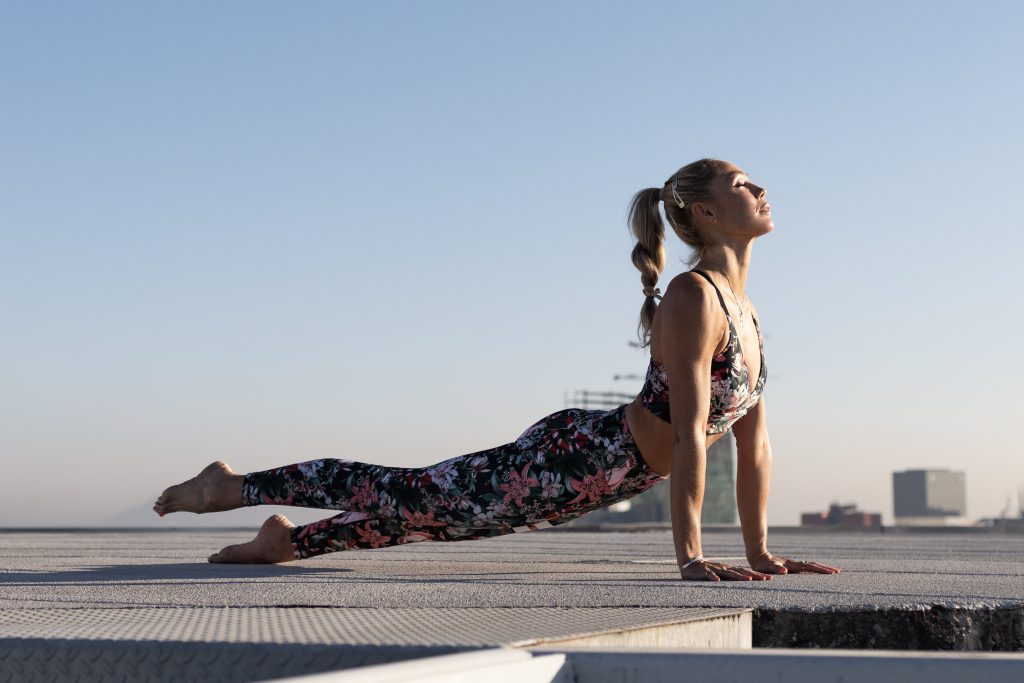
Modern lifestyle patterns have introduced a silent physical challenge to daily living. Hours spent sitting at desks, commuting in vehicles, and looking down at digital screens create persistent postural distortions and movement restrictions. Over time, these daily habits cause muscle imbalances, joint stiffness, and a gradual loss of functional mobility. Movement becomes restricted, basic physical tasks feel increasingly taxing, and the risk of chronic pain or joint injury rises.
While cardiovascular exercise and weight training are crucial components of a balanced physical routine, they do not automatically address joint stiffness or movement quality. Yoga provides a systematic, time-tested approach to restoring natural movement patterns. By combining dynamic dynamic stretching, joint articulation, core stabilization, and body awareness, yoga helps individuals regain smooth, pain-free daily mobility.
Understanding the Difference Between Flexibility and Mobility
Before exploring the specific physical benefits of yoga, it is necessary to distinguish between flexibility and mobility, as the two terms are often used interchangeably despite representing different physical attributes.
Defining Passive Flexibility
Flexibility refers to the passive ability of a muscle to lengthen through a range of motion. For example, lying on your back and having a therapist lift your leg to stretch your hamstring demonstrates passive flexibility. While flexibility is important for preventing muscle tightness, passive range of motion alone does not guarantee functional stability or safe daily movement.
Defining Active Mobility
Mobility, by contrast, is an active quality. It represents the ability of a joint to move through its complete range of motion under conscious control and with adequate strength. Using the same example, active mobility is demonstrated when you stand upright and lift your own leg forward using your hip flexors and core strength while keeping the movement controlled.
Yoga bridges the gap between passive flexibility and active mobility. It forces muscles to lengthen while simultaneously requiring surrounding muscle groups to contract and stabilize the body in space. This dual action builds functional, usable strength at the end ranges of joint motion.
Key Mechanisms Through Which Yoga Enhances Movement
Yoga influences the musculoskeletal system through several biological mechanisms that improve how the body moves through space.
Joint Lubrication and Synovial Fluid Circulation
Joints require regular movement across their full potential ranges to remain healthy. Synovial fluid acts as the body’s internal lubricant and nutrient delivery system for articular cartilage, which lacks its own direct blood supply.
When you practice yoga postures that articulate the spine, hips, shoulders, and ankles through varied angles, you create a sponge-like pumping action within the joint capsules. This movement encourages synovial fluid circulation, flushing out metabolic debris, reducing joint friction, and nourishing cartilage tissue to keep joints moving smoothly.
Fascial Remodeling and Tissue Elasticity
Fascia is a continuous web of connective tissue that wraps around every muscle fiber, organ, and nerve in the body. When physical movement is restricted to repetitive, narrow ranges—such as sitting in a chair for eight hours daily—fascial layers can form micro-adhesions, becoming thick, dry, and restrictive.
Yoga applies multi-directional, low-intensity mechanical tension to fascial sheets. Over time, this sustained movement stimulates fibroblasts, the cells responsible for producing collagen and elastin. This process helps rehydrate fascial tissue, breaks down restrictive adhesions, and restores optimal glide between muscle layers.
Neuromuscular Coordination and Proprioception
Smooth daily movement relies heavily on proprioception, which is the nervous system’s internal map of where body parts are positioned in space. Special sensory receptors called mechanoreceptors, located within muscles, tendons, and joint capsules, continuously feed positional data to the brain.
Sustaining complex yoga poses challenges balance and spatial orientation. This forces the central nervous system to refine its motor control pathways. Improved proprioception enhances balance, refines physical coordination, and helps prevent trips, slips, and accidental falls during daily activities.
Targeting Critical Areas for Daily Movement
To maintain effortless daily mobility, specific anatomical regions require targeted care. Yoga directly addresses the key joint complexes that tend to stiffen from sedentary habits.
Restoring Spinal Articulation and Posture
The human spine is designed to bend forward, extend backward, twist laterally, and rotate. Desk-bound work flattens these natural curves, locking the thoracic spine into a rigid forward slump while straining the lumbar spine and neck.
Yoga restores multi-planar spinal mobility through gentle, progressive sequences:
-
Flexion and Extension: Poses like Cat-Pose and Cow-Pose gently articulate individual spinal vertebrae, restoring healthy fluid dynamics to intervertebral discs.
-
Rotation: Seated and standing spinal twists release deep muscular tension around the paraspinal muscles, improving torso rotation for tasks like driving or reaching overhead.
-
Axial Elongation: Inversions and mild traction poses create space between compressed vertebrae, alleviating nerve compression and lower back discomfort.
Opening the Hip Complex
The hip is a ball-and-socket joint that requires multi-directional movement to function properly. Prolonged sitting keeps hip flexors in a shortened, tight state, which pulls the pelvis forward and inhibits gluteal activation, a common cause of lower back pain.
Postures such as Low Lunge, Crescent Lunge, and Lizard Pose elongate tight hip flexors and quad muscles. Meanwhile, outer hip openers like Pigeon Pose and Thread-the-Needle release tightness in the piriformis and deep lateral rotators. Unlocking hip mobility frees up pelvic movement, protecting the lumbar spine during walking, running, and bending.
Mobilizing the Shoulder Girdle and Thoracic Spine
Forward posture causes rounded shoulders and a collapsed chest, restricting overhead reach and compressing the shoulder joint structures. Yoga postures like Downward-Facing Dog, Bridge Pose, and Threading the Needle open the chest, stretch the pectoralis major and minor, and strengthen the rhomboids and lower trapezius muscles, restoring full overhead reaching capacity.
Integrating Yoga into a Daily Routine
You do not need to attend ninety-minute studio classes every day to experience mobility gains. Short, targeted daily practice yields significant physical adaptations.
-
Morning Mobility Routine: Spend five to ten minutes upon waking doing gentle spinal waves, hip circles, and Cat-Cow flows to wake up the nervous system and lubricate stiff joints.
-
Midday Desk Relief: Interrupt prolonged sitting with standing forward folds, chest-opening door stretches, and gentle seated torso twists to counteract postural slump.
-
Evening Restoration: End the day with longer, held restorative postures like Legs-Up-the-Wall or Child’s Pose to down-regulate the nervous system, release residual muscle tightness, and prepare the body for restful sleep.
Frequently Asked Questions
How does yoga help prevent age-related mobility decline?
Age-related mobility loss stems largely from progressive connective tissue dehydration, muscle mass reduction, and decreased physical activity. Yoga counteracts this process by continuously moving joints through non-habitual ranges of motion, stimulating collagen production, and maintaining neural pathways for balance and motor control. Consistent practice helps older adults maintain independence, walking speed, and confidence in navigating daily physical obstacles.
Is dynamic flow yoga or static stretching better for improving active mobility?
Both modalities serve distinct purposes in a comprehensive movement routine. Dynamic flow yoga, such as Vinyasa, warms up joint tissues, elevates body temperature, and builds active neuromuscular control through movement transitions. Static stretching, typical of Yin or Restorative yoga, allows deeper fascial tissue relaxation and target muscle lengthening when tissues are warm. Combining both approaches ensures both structural flexibility and active joint control.
Can yoga help alleviate chronic lower back stiffness caused by sitting?
Yoga is highly effective for managing sitting-induced back stiffness, provided postures are performed with proper alignment. Sitting shortens hip flexors and hamstrings, pulling the pelvis out of alignment and straining lumbar muscles. Yoga elongates these tight muscle groups while simultaneously strengthening deep core stabilizers and gluteal muscles. This restores neutral pelvic alignment and alleviates chronic stress on the lower back.
How does breath control in yoga influence physical muscle tightness?
Deep, slow breathing during yoga practice directly regulates the autonomic nervous system. Extended exhalations stimulate the vagus nerve, down-regulating sympathetic nervous system tone and reducing baseline muscle tension. When the brain senses a state of physiological safety through controlled breathing, it lowers its internal protective muscle guarding, allowing tissues to stretch further without triggering pain or defense reflexes.
What is the role of eccentric muscle contractions in yoga for joint stability?
Many yoga transitions require eccentric muscle contractions, where a muscle lengthens under tension, such as slowly lowering down from a high plank position. Eccentric strength training builds strong collagen fibers within tendons and strengthens muscles at their longest lengths. Building eccentric strength protects joint structures during sudden daily movements, such as stepping off a curb or catching yourself during a stumble.
How quickly can a person expect to notice improvements in daily mobility from yoga?
Initial neurophysiological improvements, such as decreased muscle tension and enhanced body awareness, often occur within the first two to three weeks of consistent practice. Structural adaptations, including fascial remodeling, increased connective tissue elasticity, and improved tendon strength, typically require eight to twelve weeks of regular practice performed three to four times weekly.
Can individuals with hypermobility safely practice yoga for movement health?
People with hypermobility possess naturally lax ligaments and excessive joint range of motion, putting them at higher risk for joint subluxations and instability. Hypermobile individuals can practice yoga safely by focusing on active stabilization rather than pushing into maximum passive stretches. Emphasizing isometric muscle engagement, avoiding joint hyperextension, and building strength at mid-range motions allows hypermobile practitioners to gain vital joint control and protective stability.
