

Modern life subjects the human mind and body to an unprecedented volume of daily stressors. From demanding professional responsibilities and financial pressures to constant digital connectivity, chronic emotional strain has become a pervasive health challenge. When emotional stress remains unmanaged, it manifests physically as muscle tension, elevated blood pressure, digestive distress, and sleep disturbances, while accelerating psychological fatigue and burnout.
While pharmaceutical interventions and traditional talk therapy play important roles in mental healthcare, somatic practices like yoga and conscious deep breathing offer accessible, evidence-based tools for emotional self-regulation. By integrating physical postures, controlled respiration, and targeted mindfulness, these ancient practices directly influence the nervous system, providing immediate relief from acute stress while building long-term emotional resilience.
The Neurobiology of Stress and Regulation
To understand how yoga and deep breathing reduce emotional stress, it is helpful to examine how the autonomic nervous system responds to perceived threats.
The Sympathetic Stress Response
When emotional stress strikes, the amygdala signals the hypothalamus to activate the sympathetic branch of the autonomic nervous system. This triggers the classic fight-or-flight response. Adrenaline and cortisol flood the bloodstream, causing distinct physiological shifts:
-
Elevated Heart Rate and Blood Pressure: Cardiovascular output increases to pump oxygenated blood rapidly to major muscle groups.
-
Shallow Respiration: Breathing shifts from the diaphragm to the upper chest, becoming rapid and shallow.
-
Muscle Hypertonicity: Skeletal muscles contract in anticipation of physical exertion or trauma.
-
Digestive Suppression: Non-essential functions, such as gastrointestinal motility and immune surveillance, slow down significantly.
In modern society, psychological stressors rarely require physical combat or flight, yet the body reacts with the same visceral response. Chronic activation of this pathway leads to systemic inflammation, emotional volatility, and physical exhaustion.
Activating the Parasympathetic Relaxation Response
Yoga and targeted breathing techniques interrupt this sympathetic response by engaging the parasympathetic nervous system, specifically through the stimulation of the vagus nerve. The vagus nerve is the main component of the parasympathetic system, running from the brainstem down through the heart, lungs, and digestive tract.
When you slow down your respiration and hold deliberate physical postures, the vagus nerve releases acetylcholine. This neurotransmitter acts as an internal brake, slowing heart rate, lowering blood pressure, relaxing muscle tension, and signaling to the brain that the environment is safe.
How Yoga Enhances Emotional Resilience
Yoga is far more than a physical flexibility workout; it is an integrated mind-body discipline designed to cultivate somatic awareness and emotional balance.
Somatic Processing and Emotion Release
Emotions are not merely abstract thoughts; they are physical states expressed through muscular tension, postural shifts, and visceral sensations. Suppressed emotional stress frequently settles into specific physical regions, particularly the hips, shoulders, chest, and jaw.
Practicing yoga poses, or asanas, gently stretches and releases these contracted muscular tissues:
-
Hip Openers: Postures such as Pigeon Pose and Bound Angle Pose release deep tension in the psoas and pelvic muscles, areas closely linked to the fight-or-flight response.
-
Heart Openers: Backbends like Camel Pose and Cobra Pose expand the thoracic cavity, reversing the protective, slouched posture typical of chronic anxiety and sadness.
-
Inversions and Forward Folds: Poses like Legs-Up-The-Wall and Standing Forward Fold encourage blood flow back to the heart while exerting a calming, inward-focused effect on the central nervous system.
By moving through these physical shapes with non-judgmental awareness, individuals process and discharge stored somatic tension, freeing up mental and emotional energy.
Cultivating Interoception and Mindful Awareness
Interoception is the brain’s ability to sense and interpret internal bodily signals, such as heart rate, muscle tightness, and breathing depth. Individuals suffering from high emotional stress often experience distorted interoception, feeling either disconnected from their bodies or overwhelmed by physical anxiety sensations.
Yoga refines interoception by requiring practitioners to stay present with uncomfortable physical sensations during challenging holds. Over time, this builds distress tolerance. Individuals learn to observe physical discomfort and emotional surges without immediately reacting, creating a crucial mental gap between an emotional trigger and their behavioral response.
Targeted Deep Breathing Techniques for Immediate Stress Relief
Pranayama, the ancient practice of conscious breath control, provides an immediate handle on the autonomic nervous system. Because respiration is the only autonomic function under both voluntary and involuntary control, consciously altering breath patterns directly changes physiological state.
Diaphragmatic Breathing (Abdominal Breathing)
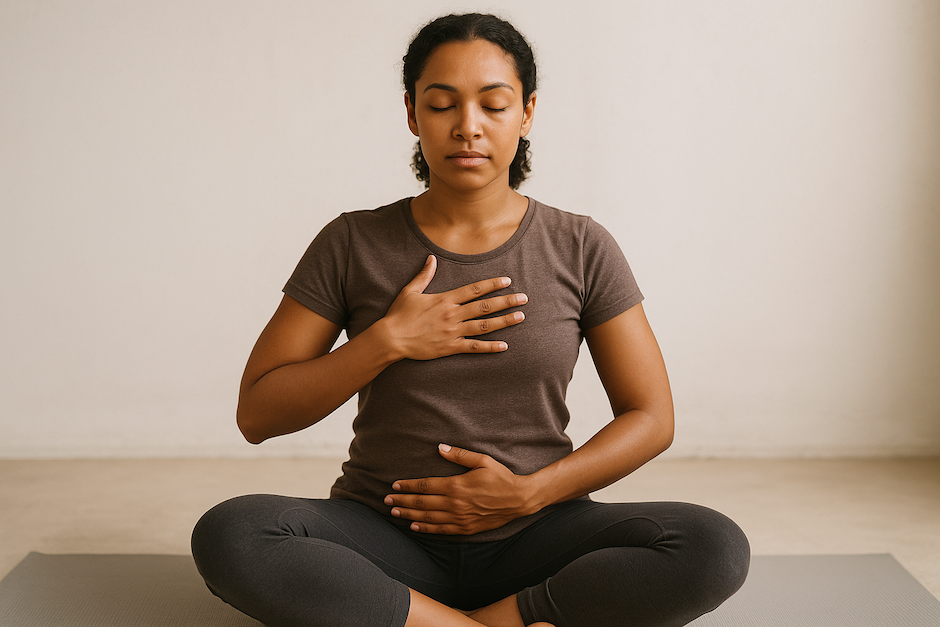
Chest breathing signals danger to the brain, whereas deep diaphragmatic breathing signals safety. Diaphragmatic breathing involves expanding the belly on the inhale rather than lifting the chest and shoulders.
-
How to Perform: Sit or lie down comfortably. Place one hand on your chest and the other on your upper abdomen. Inhale slowly through your nose, expanding your abdomen while keeping your chest relatively still. Exhale fully through gently pursed lips, allowing the abdomen to fall inward.
-
Emotional Benefit: Lowering the respiratory rate calms racing thoughts, reduces acute panic sensations, and stabilizes heart rate variability.
Box Breathing (Square Breathing)
Utilized by high-stress professionals and military personnel, box breathing regulates the nervous system during acute emotional overload.
-
How to Perform: Inhale through the nose for a count of four. Hold the breath at the top for a count of four. Exhale smoothly through the mouth for a count of four. Hold the lungs empty for a count of four. Repeat for four to six continuous cycles.
-
Emotional Benefit: The structured counting requires complete cognitive focus, redirecting attention away from intrusive stress thoughts while balancing carbon dioxide and oxygen levels in the blood.
4-7-8 Relaxing Breath
Popularized as a natural tranquilizer for the nervous system, this technique uses an extended exhale to maximize parasympathetic tone.
-
How to Perform: Inhale quietly through the nose for four seconds. Hold the breath internally for seven seconds. Exhale completely through the mouth with a gentle whoosh sound for eight seconds.
-
Emotional Benefit: Exhalations naturally slow down heart rate. By making the exhale twice as long as the inhale, this technique rapidly decreases physiological arousal, making it ideal for managing acute anger, anxiety spikes, or bedtime restlessness.
Long-Term Psychological and Brain Adaptations
Consistent practice of yoga and deep breathing produces measurable structural and functional changes in the brain over time, an example of neuroplasticity.
-
Reduced Amygdala Volume: Brain imaging studies demonstrate that regular mindfulness and yoga practices decrease gray matter density in the amygdala, the brain’s fear center. This makes individuals less prone to disproportionate stress reactions.
-
Increased Prefrontal Cortex Activity: Practices requiring sustained attention strengthen the prefrontal cortex, the region responsible for emotional regulation, executive functioning, and logical reasoning.
-
Elevated GABA Levels: Gamma-aminobutyric acid is the primary inhibitory neurotransmitter in the brain, responsible for lowering neuronal excitability. Clinical research shows that a single session of yoga can significantly boost circulating GABA levels, yielding immediate improvements in mood and reduction in anxiety.
Building a Daily Stress-Reduction Routine
Integrating yoga and deep breathing into daily life does not require hours of dedicated practice. Small, consistent efforts yield profound cumulative benefits over time.
-
Morning Grounding: Begin the day with five minutes of diaphragmatic breathing before checking emails or news feeds to set a calm nervous system baseline.
-
Midday Reset: Perform gentle chair-based stretches and three minutes of box breathing during lunch breaks to release accumulated tension from prolonged desk sitting.
-
Evening Unwinding: Practice a fifteen-minute restorative yoga sequence featuring forward folds and Legs-Up-The-Wall pose, followed by the 4-7-8 breathing technique to prepare the mind and body for deep sleep.
Frequently Asked Questions
How quickly can deep breathing techniques reduce acute emotional stress?
Controlled deep breathing begins shifting autonomic nervous system activity within ninety to one hundred twenty seconds. Slowing the breath and extending exhalations immediately activates the vagus nerve, lowering heart rate and reducing circulating stress hormones. While full emotional resolution may take longer depending on the context, physical tension and acute anxiety sensations decrease significantly within just a few minutes of focused practice.
Can practicing yoga replace traditional mental health treatments for clinical anxiety?
Yoga and deep breathing serve as powerful complementary strategies for mental health, but they are not complete replacements for professional clinical care. For severe anxiety, clinical depression, or post-traumatic stress disorder, these practices work best alongside evidence-based psychotherapy, psychiatric care, and medical treatments. Always consult a qualified mental health professional when developing an integrated treatment plan.
Why do some people feel emotional or tearful during certain yoga poses?
Holding yoga postures, particularly deep hip and chest openers, releases long-standing physical tension in muscle tissues where somatic memory and emotional stress accumulate. When these muscular guards drop, stored emotional energy is released, sometimes resulting in unexpected crying or emotional shifts. This reaction is a safe, natural physiological purging process that indicates the nervous system is processing held stress.
What is the ideal time of day to practice breathwork for maximum emotional benefits?
Breathwork can be practiced effectively at any time, but choosing specific times yields distinct benefits. Morning breathwork helps establish an emotionally stable tone for the day, mid-afternoon sessions counteract work-related stress spikes, and evening practice helps quiet a racing mind to promote restorative sleep. The most effective time is whichever consistent daily window fits seamlessly into your routine.
Is dynamic flow yoga or gentle restorative yoga better for emotional stress relief?
Both styles offer emotional benefits, but they serve different physiological needs depending on your current stress state. Dynamic flow yoga helps burn off excess nervous energy, adrenaline, and frustration through vigorous physical movement. Conversely, gentle restorative yoga utilizes props to support the body in passive shapes, making it superior for deep exhaustion, chronic fatigue, and calming an overstimulated nervous system.
How does breath-holding during box breathing impact carbon dioxide levels?
Brief, controlled breath holds during box breathing temporarily elevate carbon dioxide levels in the bloodstream. This mild hypercapnia promotes vasodilation, widening blood vessels and increasing blood flow to brain tissue. Additionally, it helps reset the brain’s respiratory center, dampening hyperventilation tendencies and reducing the physiological sensation of breathlessness common during panic states.
Can beginners perform deep breathing exercises safely without prior training?
Simple deep breathing techniques like diaphragmatic breathing, box breathing, and extended exhales are completely safe for healthy beginners. However, individuals with severe asthma, chronic obstructive pulmonary disease, or cardiovascular conditions should avoid prolonged breath holds and maintain a gentle, comfortable breathing cadence. If a technique causes lightheadedness or dizziness, stop immediately and return to natural, unforced breathing.
