

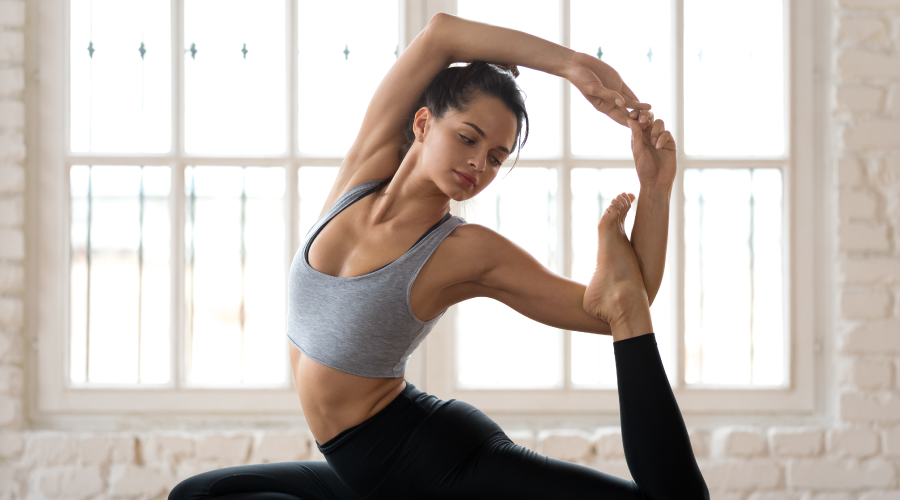
Flexibility, mobility, and balance form the foundational triad of healthy physical movement. While cardiovascular training and resistance exercises often take center stage in fitness discussions, flexibility and mobility work are the quiet enablers that make all physical movement safer, smoother, and more efficient. As the human body ages, muscles naturally shorten, joints lose lubrication, and reaction times slow. Incorporating dedicated flexibility and balance routines into your daily life counteracts these processes, preserving range of motion and drastically lowering the risk of falls and muscular strains.
Understanding the subtle distinctions between flexibility, mobility, and balance is essential before building an effective routine. Flexibility refers to the passive ability of a muscle to stretch through a given range. Mobility is an active quality, describing how freely and controlled a joint can move through its intended motion under its own muscle power. Balance relies on the nervous system, inner ear, vision, and muscle feedback to keep your center of mass over your base of support. When combined, these three attributes keep the body resilient, agile, and painless during both daily tasks and athletic performance.
The Science of Stretching: Static vs. Dynamic Flexibility
Not all stretching methods serve the same purpose. Choosing the right type of exercise at the correct time dictates whether you prepare your muscles for action or help them recover post-workout.
Dynamic Stretching for Mobility
Dynamic stretching involves active movements where joints and muscles go through a full range of motion in a controlled, rhythmic fashion. Unlike static holds, dynamic stretches do not relax the nervous system; instead, they elevate core body temperature, increase joint fluid viscosity, and prime the neuromuscular system for activity.
-
Best Usage: Ideal as part of a pre-workout warm-up routine.
-
Key Benefits: Enhances active joint mobility, improves blood flow, and readies muscles for dynamic movement patterns.
-
Examples: Leg swings, arm circles, torso twists, and walking lunges with a twist.
Static Stretching for Flexibility
Static stretching requires lengthening a targeted muscle to the point of mild tension and holding that position for an extended period, typically between 20 and 60 seconds. This style of stretching signals the muscle spindles and nervous system to release tension, allowing muscle fibers to elongate over time.
-
Best Usage: Most effective after workouts or during dedicated evening cool-down sessions when muscles are already warm.
-
Key Benefits: Increases passive flexibility, reduces chronic muscle tightness, and aids in nervous system down-regulation.
-
Examples: Seated hamstring stretch, standing quad stretch, and chest doorway stretch.
Essential Exercises for Full-Body Mobility and Flexibility
Targeting key movement hubs like the hips, spine, shoulders, and ankles creates a cascading benefit across the entire kinetic chain. The following exercises address common areas of tightness caused by modern sedentary habits.
Cat-Cow Stretch for Spinal Mobility
Modern lifestyle habits, such as prolonged sitting at desks or driving, often lock the thoracic and lumbar spine into rigid postures. The Cat-Cow stretch restores fluid movement across the entire vertebral column.
-
Execution: Begin on your hands and knees on an exercise mat, with wrists positioned directly under shoulders and knees under hips. Inhale deeply as you drop your belly toward the floor, tilt your pelvis forward, lift your chest, and look slightly upward for Cow pose. Exhale fully as you arch your spine toward the ceiling, tuck your tailbone under, and gently lower your chin toward your chest for Cat pose.
-
Duration: Flow between these two positions smoothly for 10 to 12 slow breath cycles.
-
Key Focus: Move continuously through each vertebra rather than forcing extreme end ranges.
World’s Greatest Stretch for Hip and Thoracic Opening
Widely regarded by strength coaches and physical therapists as a premier dynamic mobility movement, this multi-step stretch opens tight hip flexors, hamstrings, and the upper back all in one fluid sequence.
-
Execution: Stand tall and step forward into a deep lunge with your right foot. Place both hands on the inside of your right foot on the mat. Extend your left leg straight back with your toes tucked. Take your right elbow and reach it down toward the inside of your right ankle. Next, rotate your torso to the right, sweeping your right arm up toward the ceiling while opening your chest. Return your right hand to the floor, push your hips back to straighten your front leg slightly to stretch the hamstring, then step forward to repeat on the opposite side.
-
Duration: Perform 5 to 6 repetitions per side as part of a dynamic warm-up.
-
Key Focus: Keep your trailing back leg engaged and straight throughout the movement.
Standing Doorway Chest Opener
Rounded shoulders and tight chest muscles pulled forward by computer work restrict breathing and impair shoulder mechanics. This static stretch opens the pectorals and front shoulders.
-
Execution: Stand in an open doorway. Bend your elbows at 90-degree angles and place your forearms flat against the door frame on either side, with your upper arms parallel to the floor. Step forward through the doorway with one foot until you feel a firm but comfortable stretch across your chest and shoulders. Hold the position while taking deep, steady breaths.
-
Duration: Hold for 30 to 45 seconds, repeating 2 to 3 times.
-
Key Focus: Avoid arching your lower back to reach further; keep your abdominal muscles braced.
Targeted Drills for Superior Balance and Stability
Balance is a skill that must be trained deliberately. By challenging the body’s stabilizing muscles and proprioceptive pathways, you train your brain to make lightning-fast micro-adjustments to prevent falls.
Single-Leg Stance with Head Turns
Simple single-leg standing drills force the small stabilizing muscles in the foot, ankle, and hip to work in unison. Adding head turns removes static visual cues, forcing your internal balance systems to adapt.
-
Execution: Stand upright near a sturdy wall or countertop for safety. Shift your weight onto your right foot and lift your left foot slightly off the floor, keeping your right knee soft rather than locked out. Once stable, slowly turn your head to look over your right shoulder, then slowly turn to look over your left shoulder.
-
Duration: Perform the head turns continuously for 30 seconds per leg.
-
Key Focus: Maintain an upright torso and focus on grounding through the three contact points of your foot: the heel, the big toe joint, and the pinky toe joint.
Tandem Heel-to-Toe Stance and Walk
Tandem standing narrows your base of support, mimicking the challenge of walking along a balance beam and strengthening ankle stability.
-
Execution: Stand with your right foot placed directly in front of your left foot, so the heel of your right foot touches or comes close to the toes of your left foot. Distribute your body weight evenly between both feet. For an added challenge, slowly walk forward in a straight line for 15 to 20 steps, placing each heel directly in front of the opposing toe with every step.
-
Duration: Complete 3 to 4 walking sets down a hallway or open floor space.
-
Key Focus: Keep your eyes fixed on a steady target ahead rather than looking straight down at your feet.
Structuring a Complete Mobility and Balance Routine
Consistency is far more critical than intensity when working on flexibility and balance. Short, daily sessions yield better long-term improvements in tissue elasticity and joint stability than one long session once a week.
| Training Phase | Objective | Recommended Exercises | Frequency |
| Morning / Pre-Workout | Dynamic Mobility and Tissue Warm-up | Cat-Cow, World’s Greatest Stretch, Leg Swings | Daily (5 to 10 Minutes) |
| Mid-Day / Post-Workout | Static Flexibility and Muscle Elongation | Doorway Chest Opener, Seated Hamstring Stretch | 3 to 5 Days per Week |
| Dedicated Balance Phase | Proprioception and Ankle Stability | Single-Leg Stance, Tandem Walks | 3 to 4 Days per Week |
Frequently Asked Questions
How long does it take to see noticeable improvements in flexibility?
Initial nervous system adaptations can yield minor improvements within two to three weeks of consistent stretching. However, true structural changes in muscle tissue length and fascial flexibility typically require six to eight weeks of daily or near-daily practice. Consistency is the primary factor in retaining those gains.
Is it better to stretch before or after cardiovascular exercise?
Dynamic stretching should always be performed before exercise to increase heart rate, warm up connective tissues, and mobilize joints. Static stretching should be saved for after exercise when muscles are thoroughly warm, as performing long static stretches on cold muscles can temporarily reduce force production and elevate injury risk.
Why do my muscles feel tight again shortly after I stretch them?
Muscular tightness is often a protective response triggered by your nervous system rather than an actual physical shortening of the tissue. If a joint lacks stability or strength in a certain range, the brain signals surrounding muscles to tighten up to protect the joint. Combining strength training through full ranges of motion alongside flexibility work helps re-educate the nervous system to maintain open tissue length.
Can balance exercises help reduce chronic lower back pain?
Yes, targeted balance training strengthens the deep core muscles, glutes, and ankle stabilizers. When these supporting structures function properly, they absorb impact and distribute forces evenly across the body during daily movements, taking excessive stress off the lower spine and helping relieve chronic lower back tension.
How does hypermobility differ from healthy flexibility?
Flexibility is the ability of muscles to lengthen within a safe joint range, whereas hypermobility refers to joints that move beyond normal anatomical limits due to lax ligaments or loose connective tissues. Individuals with hypermobility should focus more on joint stability, motor control, and strength exercises rather than excessive deep stretching.
What should I do if a stretch causes sharp or shooting pain?
Stretching should produce a feeling of mild tension or gentle pull within the muscle belly, never sharp, pinching, or shooting pain. Sharp sensations often indicate joint impingement, nerve compression, or a muscle strain. If you experience sharp pain, back out of the stretch immediately and consult a physical therapist or healthcare provider for an evaluation.
